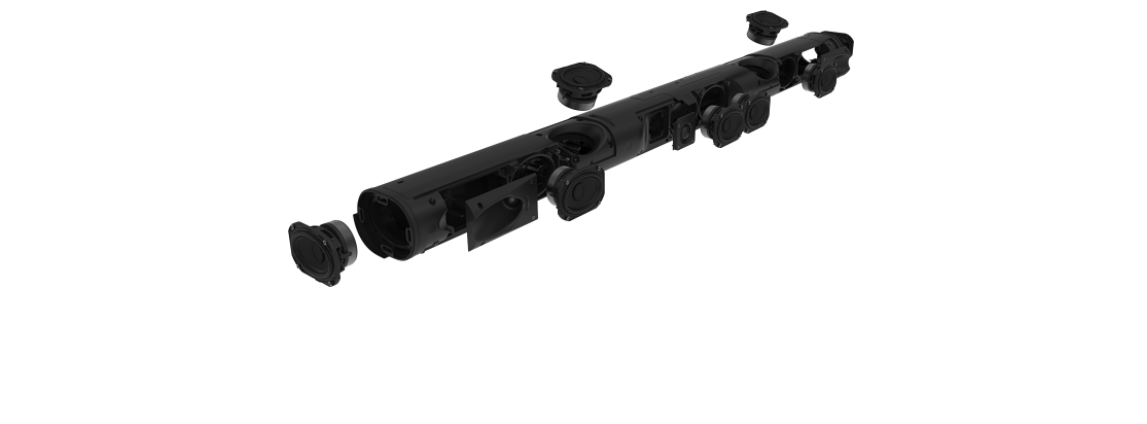

sonos
navigation ↓
Introduction
For the better part of two decades, Sonos has inspired the world to listen better. With an initial focus exclusively on music, the brand engaged with the tastes and listening habits of its customers earnestly and thoughtfully to make meaningful cultural connections. Around three years ago, with the advent of voice assistants and the return of Audible, Sonos expanded its conception of audible media with the ‘sonic internet’ and began including references to podcasts and audiobooks in more brand communications. Recently, as Beam and Arc have modernized the home theater range, Sonos has worked to ensure their approach to TV and movies is as considered and representative of their audience as the myriad other media they listen to and reference.
Now, starting this holiday season and building next year, Sonos will engage with another listening experience that not only looms large in the marketplace, but is already beloved by countless existing Sonos customers: Video Games.
The insights covered here are meant to help teams at Sonos engage with this audience confidently and the recommendation should help authentically extend the already-established and consistent brand voice into this exciting new arena.

Timing
This holiday season, gaming will experience a generational leap as Sony and Microsoft release new versions of their video game consoles.
As gamers upgrade, they’re also updating other parts of their home theaters to take advantage of next-generation video and audio technology.
This poses an exciting opportunity for Sonos to develop a voice and strategy to engage with this growing audience.
_(1).jpg)
In addition to the millions of gamers that will be looking to unlock the potential of their next-gen consoles by upgrading their TV sound this holiday season…
there are already many Sonos owners that are gamers — over 60% of Sonos households under 44 game weekly!
Marketing content related to video games will make this audience feel "seen" and thus, deepen brand affinity.

Sonos should have a perspective on gaming. It’s a huge market and we don’t really address it. Sara Morris, Senior Product Manager

The truth is in the numbers
The video game industry is larger than the movie and music industries combined. *
Like music listeners, this large market is more diverse than our cultural stereotypes and media misconceptions.
- The number of people playing video games rose from 1.84 billion in 2014 to well over 2.5 billion in 2020
- 75% of US households own a device that they use to play video games
- 35-44 years is the average age range of a gamer
- 70% of gamers are age 18 or older
- 60% of Americans play video games daily
- 46% of US gamers are women
- Adult women represent a greater portion of the video game-playing population (33%) than boys under 18 (17%)
- 70% of parents believe video games have a positive influence on their children’s lives
- 73% of parents believe video games are educational
- 52% of gamers are college educated
- There are an average of 2 gamers in each game-playing US household
- 63% of adult gamers play with others
- Youtube videos are the most influential factor on game purchase decisions
Sonos Households
Among all Sonos HHs, over 60% of those 44 or younger spend at least some time per week playing video games.
Younger households (those under 35) are the most engaged, among HT HHs these trends are amplified where more than 80% are engaging in gaming at some capacity each week.
All Sonos Households
- 44% engage with video games weekly
- 16% spend 9+ hours per week playing video games
- 8% spend 15+ hours per week playing video games
Sonos Households with a Home Theater product
- 47% engage with video games weekly
- 16% spend 9+ hours per week playing video games
- 9% spend 15+ hours per week playing video games
Gamers are a unique demo
Because gaming is an increasingly endemic cultural medium, the brands that are going to best capture and keep that audience are the ones who can establish meaningful connections.
Much like the challenge facing legacy sports brands attempting to enter the similarly large but elusive skateboarding market, gamers are a sophisticated and engaged audience accustomed to being half-heartedly targeted by multinationals that didn't do the work to learn about the depth of their favorite art form.
The fascinating history of how video games became ‘boys toys’
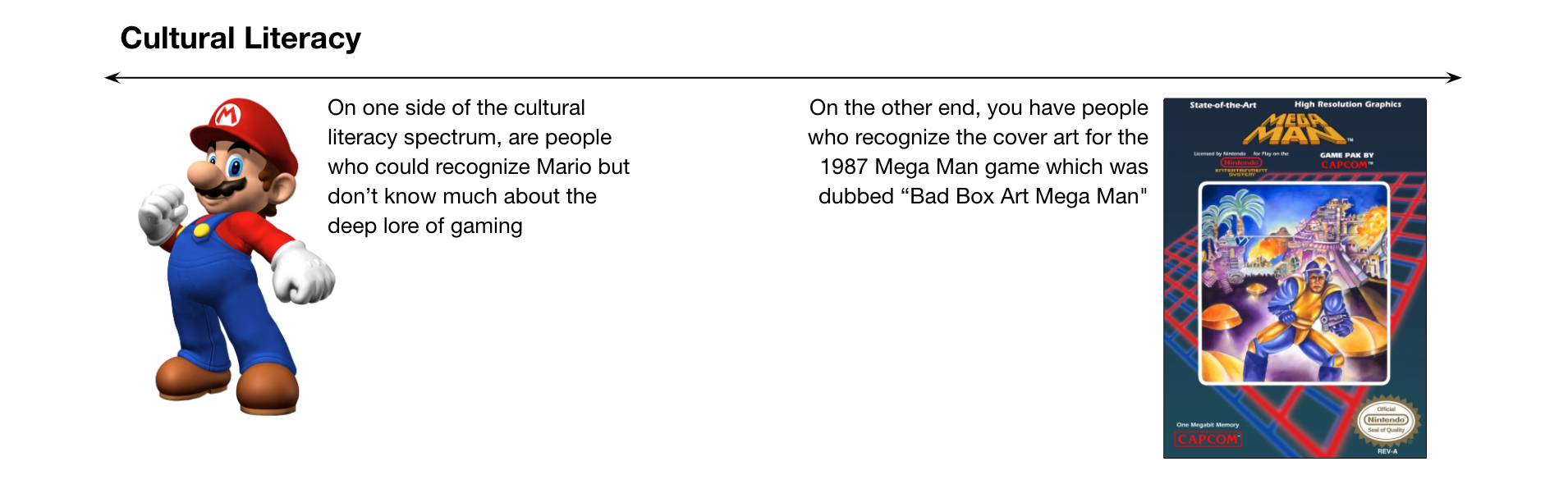
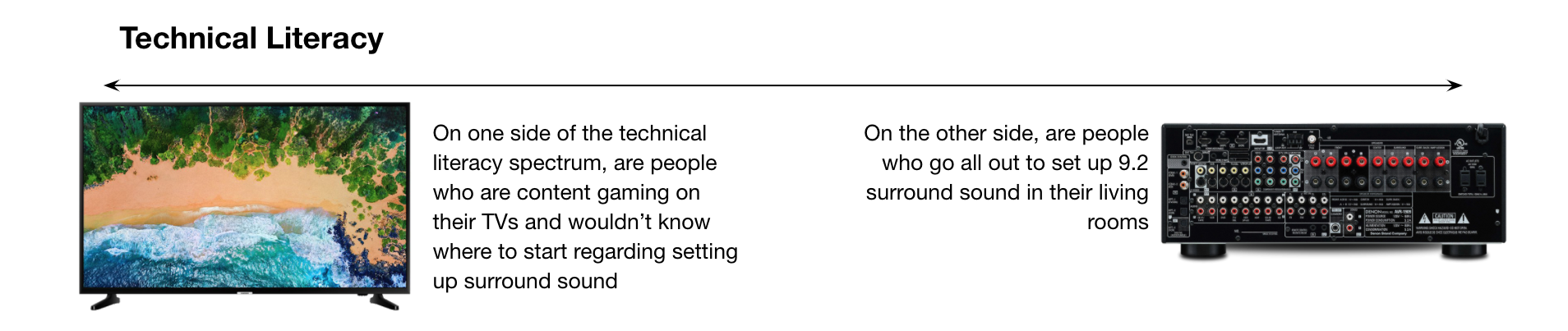
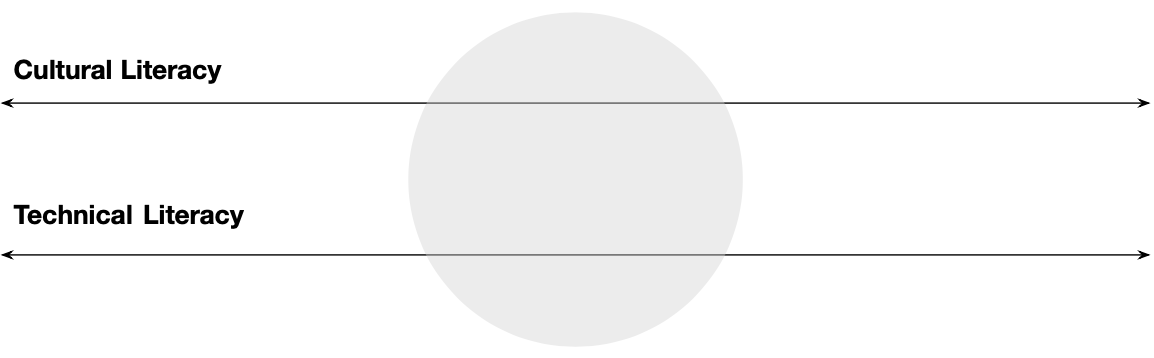
It's best to picture gamers as living somewhere on the following two spectrums:
Know your audience
Speak to the demographic too far to the left on the spectrum and you risk seeming like a “n00b” and not authentic.
Inversely, speak to the demographic too far to the right and risk going over the heads of most of your audience.


The thread that ties gamers together
There is a misconception that video games are predominantly violent. Similar to the film industry, violent games exist, but to view the entire industry through that lens is a disservice to the depth and creativity of the artform.
The thread that ties all gamers together is the notion that the video games are an artform. Many share the belief that future art historians will cite video games as the defining artform of the 21st century.
Sonos has done the work to establish bonafide cultural relevance in the music space. Now is the opportunity to expand this curatorial filter to an entirely new medium.
Indie games have big reach
Perhaps nowhere is the artistry of game design better represented than within the indie games industry.
Independent game developers can, generally, take more risks.
They can reimagine what constitutes a video game in a way that feels akin to experimental and avant garde music, film and art of the 60s and 70s — and in the process, invent entirely new genres. Meaning that indie devs bring a much larger variety of games to the table, attracting people that would otherwise not have been interested in gaming.
It is important to note, that these games are indie in financial backing but not in reach — similar to the music industry.
Game genre by popularity
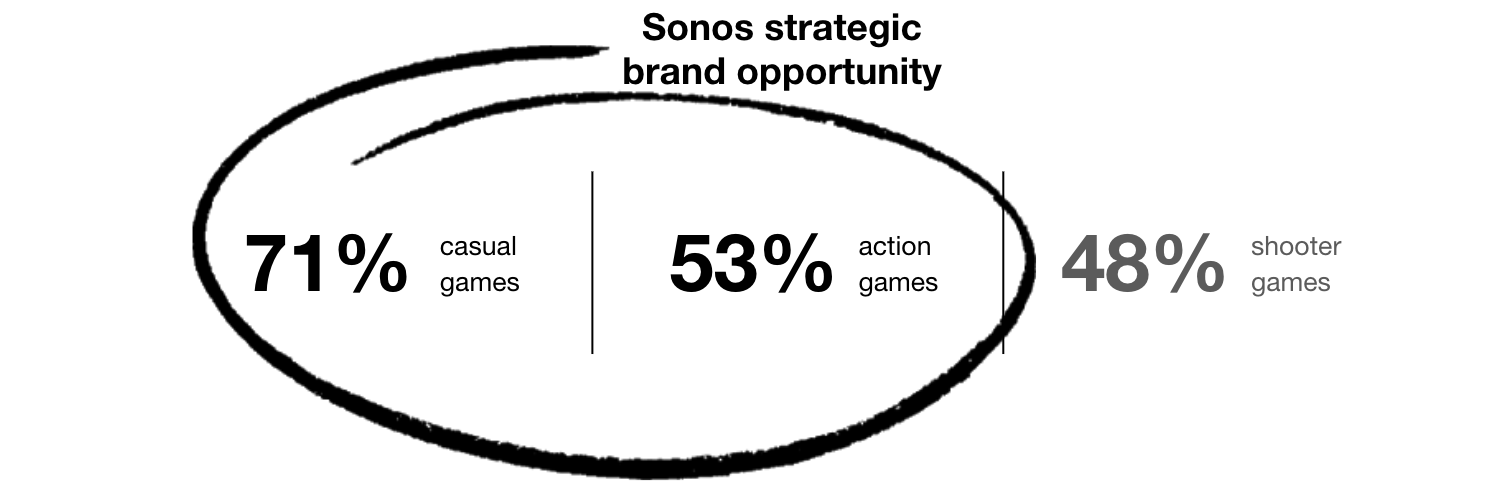
Popular console game genres beyond shooters
Survival Games
Survival games require players to forage for their own food and water in order to survive. The survival genre isn’t just about roughing it, of course. Much of the allure comes from the crafting and base-building systems.
Adventure & Puzzle Games
Essential elements of the genre include storytelling, exploration, and puzzle solving. Adventure games have been described as puzzles embedded in a narrative framework, where games involve narrative content that a player unlocks piece by piece over time.
Sports & Racing games
Sports and racing games may be based on anything from real-world leagues to entirely fantastical settings that break the laws of physics. In general, they can be distributed along a spectrum anywhere between hardcore simulations, and simpler arcade games.
Walking Simulators
Perhaps the most derided of the genres created in the last decade, the walking simulator is also among the most artistic and expressive. Players walk from point A to point B while a narrative plays out all around them. It’s an experience not unlike a multimedia art exhibition. Games like Firewatch have achieved both commercial success and critical acclaim.
How sound takes shape in gaming
Sound design, voice acting and music play an important role in the overall experience of modern video games. Game audio can help designers to create immersion in the game world and even solve design problems.
Video game sound can be broken down into three categories:

Effects
In games, effects have deep meaning, as sound placed around the gamer’s environment provides feedback, creates immersion and encourages exploration — all of which are key ingredients to a great gaming experience.
In contemporary gaming, being able to hear where sounds come from, relative to a gamer’s own position, not only creates a more engaging experience, but provides a measurable competitive edge.

.gif)
This presents a readymade reason to showcase the rich, enveloping surround sound experience on Sonos.
Interestingly, because of the repetitious nature of gaming, sound effects become a reliably recognizable audio trigger for audiences in a way that’s more akin to music than movies.
Music
Music in video games develops the setting, builds emotion, and provides a tool to tell a story with no words. Much like the film industry, contemporary games leverage both original scores (often orchestral) and feature licensed music in memorable ways.
Distinct from movie music though, video game scores are often dynamic, serving different music dependent on a players progress or path, or providing listening options within the game.
This poses an exciting opportunity for Sonos to showcase its impressive dynamic range and underscore the value of a single system for all one’s listening needs.
Notably, game franchises like Tony Hawk Pro Skater and Grand Theft Auto have introduced huge audiences to both mainstream and less-known musical acts and brought the ideas of radio and playlist curation into the gaming space. Frank Ocean curated a station called blonded Los Santos in GTA V!
More recently, mainstream musicians like Travis Scott and 100 Gecs have performed to virtual audiences of millions in games like Minecraft and Fortnite.
Dialogue
Video games of the past were marked by weak narratives and terrible voice acting. Today’s games feature epic narratives that span dozens of hours and feature Hollywood talent.
Just as with movies, vocal clarity is important to gamers — with many enabling subtitles so they don’t miss a beat.
This gives us the perfect opening to features dialogue clarity on Sonos and frame the Speech Enhancement feature as an alternative to onscreen subtitles that break immersion.
Hideo Kojima, an ‘auteur’ game designer whose oeuvre stretches to the mid 80s, recently released ‘Death Stranding’ featuring a star-studded cast including Mads Mikkelsen, Lea Seydoux, Margaret Qualley, and Guillermo Del Toro.
Early days for Spatial Audio in Gaming
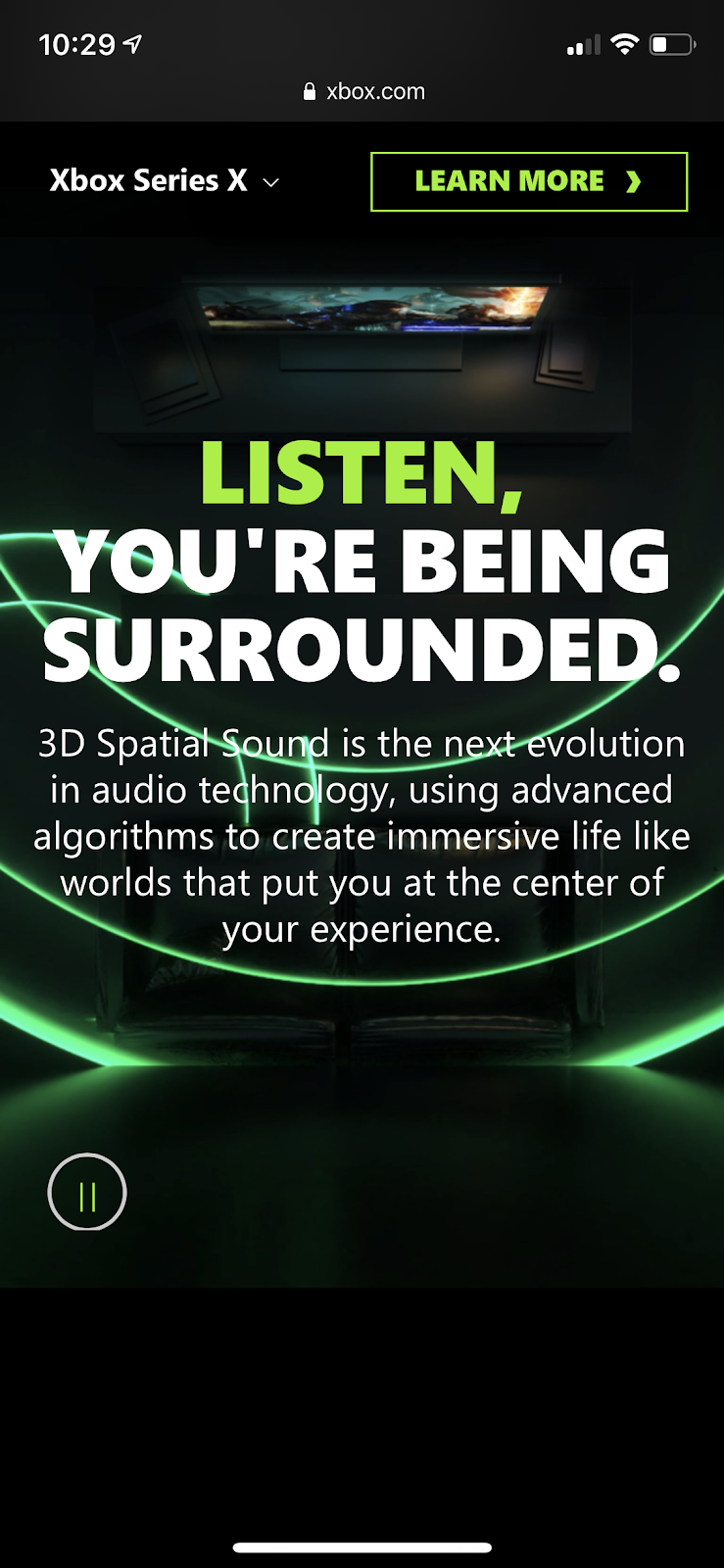
Next-gen consoles are touting spatial audio as one of the key reasons for gamers to upgrade their systems.
Stereo and surround sound have their own unique advantages but, for gaming, 3D audio is a particularly exciting advancement. Since video game audio is dynamic, spatial sound allows you to hear sounds as if they were happening around you. It puts you — the gamer — center stage and brings added intensity to every scene.
Current and next-gen Microsoft consoles support Dolby Atmos. Sony however, is not planning on supporting Dolby Atmos. Like many emerging technologies and standards, Atmos support is spotty and uneven across the industry.
There’s certainly an opportunity to position Arc as the go-to Atmos soundbar for Xbox to a very specific market, but given the relative nascence of this particular technology, we’d suggest de-emphasizing Atmos in general communications toward the gaming space and leaning more heavily on the immersive effect of surround sound and high quality audio in general… for now.

From your pocket to the home theater
Contemporary gaming takes place on a huge range of devices. From the ubiquitous and addictive smartphone games that keep countless eyes glued to handheld screens, to the console games which have developed a wide variety and striking sophistication since the introduction of Nintendo 35 years ago, to computer games, both the casual variety and the sometimes professionalized PC gamer market, it’s important to understand that the distinctions between these platforms and their respective markets may be more important for our purposes than their similarities.
While it’s technically possible to wirelessly stream audio to Sonos from handheld gaming devices, and some ambitious PC ‘rigs’ do employ Beams beneath computer displays, for a variety of reasons:
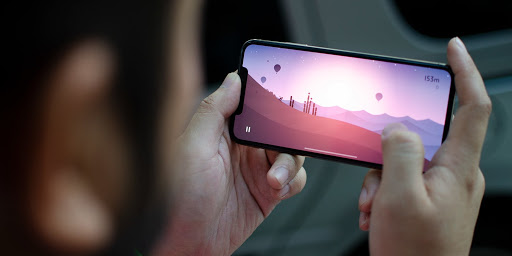
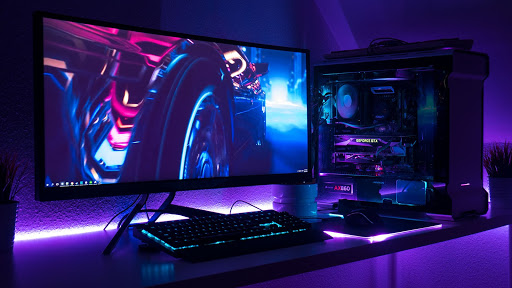
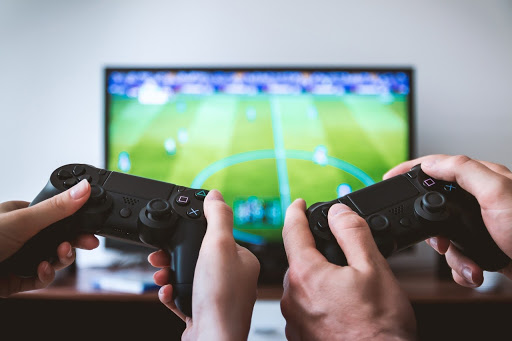
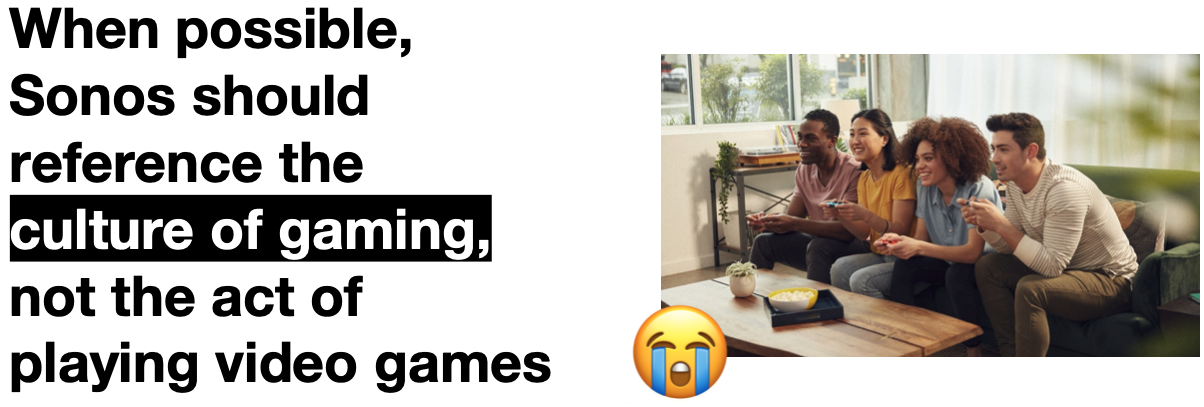
Sonos should limit representations of gaming to the middle of the range described above — a large market appropriately called ‘couch gaming’ and most simply defined by a gaming console connected to a television, controlled by a usually wireless controller.
Armchair Quarterback
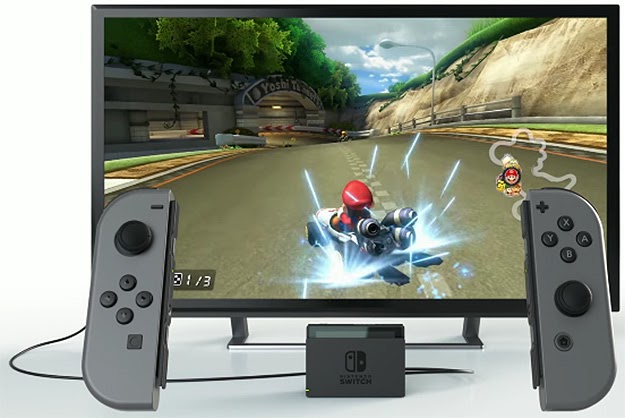
Even this ‘couch gamer’ segment is more diverse and heterogeneous than we may imagine. Though we may think first of the flagship consoles — countless iterations of Microsoft’s Xbox and Sony’s Playstation, including the forthcoming next gen versions — Nintendo has also made a impactful return to the living room recently with Switch, a handheld console that can be ‘docked’ to a TV for big-screen and multiplayer play.
Beyond those even, Silicon Valley giants have renewed efforts in this space with their own products and services that reflect their different brand propositions. The recently introduced Apple Arcade can be played on an Apple TV, with or without a third-party controller, and the ambitious Google Stadia caters to more serious gamers and streams directly into your living room from Google’s servers.
To Sonos, gaming should be defined by and limited to this aforementioned range. It means sitting on a sofa, holding a controller, and looking at a TV. In some contexts, it may serve the brand best to treat these different consoles generically and interchangeably. If, and when we have the opportunity to be more specific, we should represent and target PlayStation and Xbox gamers as they dominate this space.
Game sound is better heard out loud
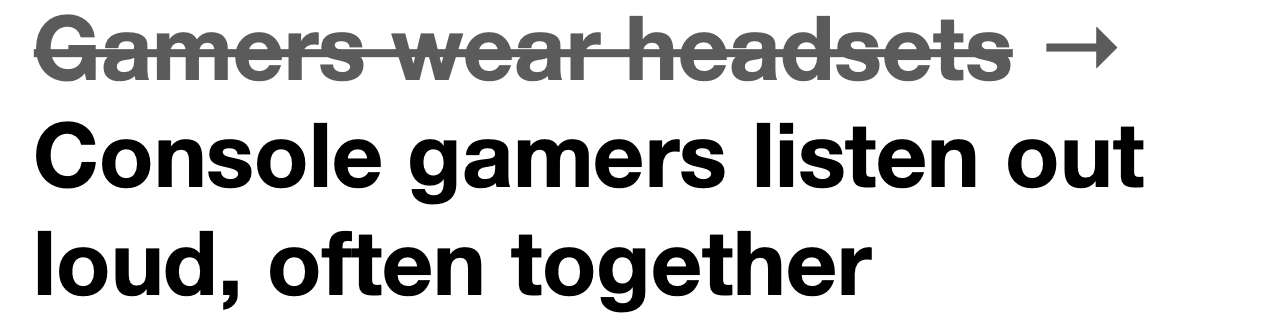
Although we may think of gaming as a space dominated by headsets, the reality is more nuanced and creates a clear opportunity for Sonos HT products.
PC gamers, who often game in smaller spaces, close to their screens and with keyboards before them, do tend to favor headsets. Console gamers, on the other hand, whose systems are connected to televisions, often prefer to game out loud, frequently together.
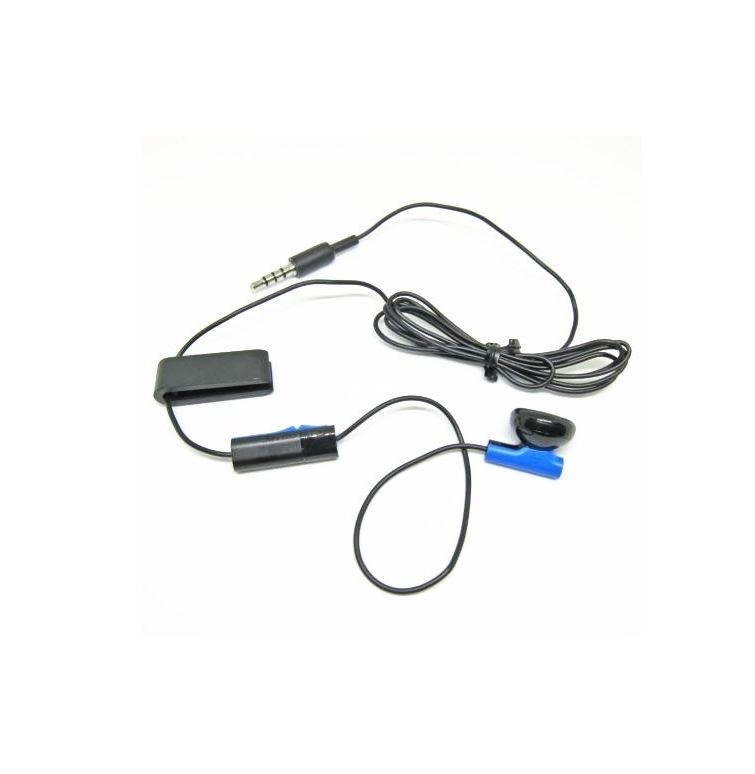
A non-trivial minority of contemporary games feature an emphasis on online collaboration and encourage ‘chat,’ through headsets. Even here though, players often talk through the bare-bones mono headsets that ship with their consoles and plug into their controllers, but listen out loud.
The overlap in market share of console gamers and stereo headset owners is vanishingly small.

I never want to put headphones in… It’s a disservice not to use the whole living room. Randall Parrish, Art Director
Sonos is great for gaming out loud
Sonos Playbar is still being named best Soundbar for Gaming 7 years after being released!
…wait until they hear Arc 😉
“The Playbar (about $700) is a nine-driver soundbar that truly shines at creating a simulated surround sound experience. The speakers inside of it do a great job of making sounds feel like they are coming from different directions, even though it doesn't have rear speakers.” — Best Soundbars for Xbox One

There is a sweet spot in the middle of the spectrums
Cultural Literacy
Higher than average cultural literacy regarding video games — they may not have heard of “Bad Box Art Mega Man” but they could recognize a screen grab from Zelda: Breath of the Wild in a split second.
Identify and engage with the equivalent ‘culture seeker’ of the gaming space whose fluency will be rewarded by a brand that doesn’t underestimate and meets them where they are.
Technical Literacy
Higher than average technical literacy — they may not understand the distinction between Atmos and surround sound, but they know how to navigate their console’s menus to turn either on.
We can afford to be slightly more technical and feature-specific when addressing this market than the average Sonos customer.
The Artful Gamer
The Artful Gamer is a console gamer. They have a PlayStation, Xbox, or Switch connected to a flat screen in their living room. They may also game on a computer, but our focus is on their console gaming.
They see and respect video games as an under-recognized art form. They’re aware of myriad mainstream misconceptions about their favorite hobby, but are excited to share a new, brain-bending indie game with their friends and families.
Beyond just gamers, they are media lovers — they have an insatiable appetite for movies and music.
They feel largely unseen by the existing gamer hardware market that underestimates the age, sophistication, and interior design standards of a market they inhabit, but don’t see themselves reflected in.

Positioning
Position Sonos as a brand that understands and values the immeasurable impact and importance of sound to the gaming experience.
Similar to how Sonos deeply understands and engages with the listening habits of our audience, we should strive to reference gaming touchpoints that feel as personal and authentic to the Sonos Gamer as the Sound System shows feel to Sonos Radio listeners.
In addition to being a natural and authentic position for the brand — dovetailing particularly nicely with recent Sonos Radio and Sound System efforts — this may prove to be an ‘own-able’ space in the market: there is little precedent in the marketplace for either brands or media outlets prioritizing the value of sound to the gaming experience.